Two ED physicians can look at the same patient, the same labs and the same protocol and reach different decisions. One admits to telemetry. The other calls for a transfer. That is not necessarily a knowledge problem. It is a decision problem, and it plays out in emergency departments across the country every day.
This article looks at why data alone does not change clinical decisions, what clinical decision variation costs hospitals, and why closing the gap takes two steps working together: diagnosing variation at the right resolution, and intervening when the decision is actually happening.
Key Takeaways
- Clinical variation is often a decision problem, not a knowledge problem. Risk tolerance, culture, available expertise, workload and friction all shape what happens next.
- When transfer takes one call and a specialist opinion takes time nobody has, transfer often wins because it is the easiest option, not the best one.
- Hospital-wide averages are not specific enough to act on. Variation has to be diagnosed by unit, shift, case type, circumstance and sometimes individual physician.
- The intervention has to reach the bedside while the decision is being made, and it has to be faster and easier than the default.
- Diagnosis and intervention only work together: identify the gap, bring expertise into that moment, then measure again to see whether the pattern changed.
Two ED physicians. Same patient. Same labs. Same bed board. Same protocol on the wall. One admits to telemetry. The other calls for a transfer.
Nothing about the case changed between those two decisions. Only who was standing at the bedside.
That is not necessarily a knowledge problem. It is a decision problem, and it plays out in emergency departments across the country every day.
Hospitals have spent years getting better at collecting data, identifying patterns, and developing best-practice protocols. What remains much harder is closing the gap between what the data says should happen and what actually happens in the room at 2 a.m.
That gap matters because clinical decisions are never made in a vacuum. Risk tolerance, local culture, available expertise, workload, and friction all influence what happens next.
When transfer is the path of least resistance
When the fastest, easiest, most defensible option is to transfer a patient, while getting a specialist opinion requires time that nobody has, transfer often wins. Not necessarily because it is the best clinical decision, but because it is the easiest decision available at that moment.
Why Data Alone Does Not Change Clinical Decisions
The traditional improvement playbook makes sense:
- Pull the data.
- Find the pattern.
- Develop a best-practice protocol.
- Roll it out.
- Expect behavior to follow.
Hospitals have become very good at the first several steps. They have dashboards, protocols, and increasingly sophisticated analytics. But information alone does not eliminate variation.
Two clinicians can look at the same information and make different decisions because the decision itself is shaped by the environment in which it is being made.
Behavioral economics has studied this phenomenon for years. People do not make decisions based solely on information. They also respond to friction, uncertainty, incentives, defaults, and the options immediately available to them. Healthcare is no exception.
A physician at hour eleven of a shift who has a marginal case in front of them and no specialist readily available may reasonably decide that transfer is the safest path forward.
What Does Clinical Decision Variation Cost Hospitals?
Unnecessary or avoidable transfers can create costs well beyond transportation.
A patient who leaves the organization may represent lost revenue and capacity that could have been retained locally. The transfer can fragment the patient experience, separate patients and families from their local care teams, and affect relationships with referring physicians.
Yet those downstream effects are difficult to see when the organization is looking only at an aggregate transfer rate. That is why I think solving clinical variation requires two steps that have to work together.
Step One: Diagnose Variation at the Right Resolution
Most hospitals can tell you their overall transfer rate or average ED boarding time. That is useful information, but it isn't specific enough to tell you what to do next, and that specificity is what is needed to fuel change.
Where is variation actually occurring?
- Which unit?
- Which shift?
- Which case type?
- Which circumstances?
- Sometimes, which individual physician?
The useful version of the data is the one specific enough to point toward an intervention.
There's a company that brings all of that specific data into focus: Depth. Depth helps health systems move beyond hospital-wide averages to identify where variation exists, how significant it is, and where the opportunity for improvement may be greatest.
Instead of simply telling a hospital that transfers are high, that level of analysis can begin to show where the decision gap is widest and help facilities reduce bottlenecks and optimize patient flow and placement.
But identifying the gap is only half the job.
Step Two: Intervene When the Decision Is Actually Happening
A report showing last month's variation cannot help the physician standing at the bedside tonight. That physician needs access to the right expertise while there is still an opportunity to influence what happens next.
The intervention has to be fast enough and easy enough to compete with the default option.
The better clinical option has to become an easier operational option. This is where Vitalchat comes in.
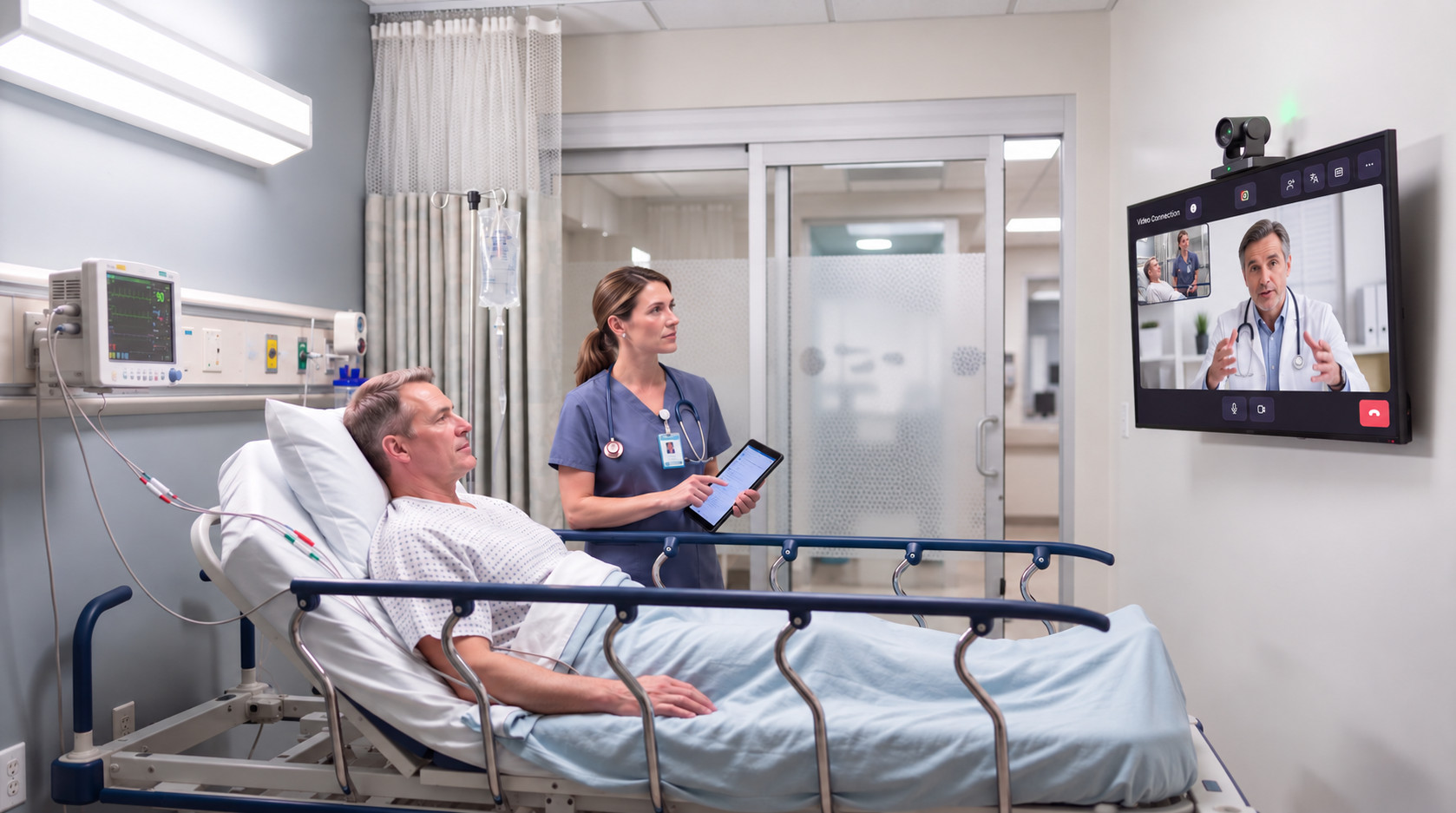
Vitalchat's platform creates a real-time collaborative environment that can extend clinical expertise to the bedside when and where decisions are being made. The goal is not to replace the clinician in the room. It is to give that clinician a lower-friction path to additional expertise when they need it. You can see how health systems put this into practice in our case studies, including our work with University Hospitals.
That distinction matters.
A protocol provides information. Real-time collaboration provides another clinician. Sometimes, that is what changes the decision.
 Alan Pitt, MDCo-Founder, Vitalchat
Why Diagnosis and Intervention Have to Work Together
Neither half of this equation is especially powerful on its own.
The Closed Loop Between Analytics and Action
Put them together, and the workflow becomes much more interesting:
- Identify where clinical decision variation is occurring.
- Understand which workflows, cases, shifts, or clinicians are driving it.
- Bring additional expertise into those moments with as little friction as possible.
- Measure the same data again.
- Determine whether the pattern actually changed.
Depth helps identify where the decision gap exists. Vitalchat helps health systems bring expertise into the moment when that decision is being made. Then the data can tell you whether the intervention worked.
Clinical Variation Is a Human Factors Problem
I think this is a more useful way to talk about clinical variation than the way it is often discussed. Variation is easy to characterize as a training problem, a compliance problem, or something another protocol will fix. Sometimes those things matter.
But clinical variation is also a human factors problem. And human factors become particularly important overnight, on weekends, during periods of high census, and toward the end of a long shift, when the easiest available option and the best available option may be most likely to diverge.
None of this is a criticism of clinicians. A physician who defaults to transfer at hour eleven of a shift, with no specialist readily reachable and a marginal case in front of them, may be making a completely rational decision given the options available at that moment.
The fix is not to ask that physician to be more careful
The fix is to make the better option easier to choose.
What happens after the data identifies the problem?
If you are looking at your inadvertent-transfer or ED-throughput numbers and wondering why they have not moved despite a good protocol and a good dashboard, it may be worth asking a different question. Because the data may never have been the missing piece.
Contact Us to talk through where expertise could reach the bedside in your environment.
FAQ
Why do two ED physicians make different decisions about the same patient?
Because the decision is shaped by the environment in which it is made, not only by the information. Risk tolerance, local culture, available expertise, workload and friction all influence what happens next, so two clinicians can see the same data and reach different conclusions.
Why don't dashboards and protocols reduce clinical variation on their own?
Information alone does not eliminate variation. People also respond to friction, uncertainty, incentives, defaults and the options immediately available to them. A protocol on the wall does not change what is available to a physician at hour eleven of a shift with no specialist readily reachable.
What does avoidable transfer cost a hospital?
Costs go well beyond transportation. A patient who leaves may represent lost revenue and capacity that could have been retained locally, and the transfer can fragment the patient experience, separate patients and families from their local care teams, and affect relationships with referring physicians.
What level of detail is needed to diagnose variation?
More than an overall transfer rate or average ED boarding time. Organizations need to see variation by unit, shift, case type and circumstance, and sometimes by individual physician. The useful version of the data is the one specific enough to point toward an intervention.
How does real-time collaboration change a transfer decision?
It gives the clinician in the room a lower-friction path to additional expertise while there is still time to influence the outcome. A protocol provides information. Real-time collaboration provides another clinician, and sometimes that is what changes the decision.