Some of the most consequential failures in care are not errors. The surgery goes well, the chart is clean, the instructions are clear, and the patient still ends up back in the ED because no one was close enough to notice a change while it was still small.
This piece argues for a plainer way to think about distributed care: value is presence minus friction. Written for health-system leaders designing virtual, home-based and cross-facility care models.
Key Takeaways
- The failure mode that matters most does not look like a failure: no error, clean chart, readmitted patient. The honest explanation is that no one was there.
- Value = Presence − Friction. Presence is a clinician noticing and intervening; friction is the gap between a patient and active clinical attention.
- Friction is not a neutral cost line. It drags down presence, which is why the savings and the harm come from the same source.
- Distance is measured in miles, but also in floors, time, workload and competing priorities, and telemedicine collapses friction at every one of those scales.
- Access is not presence. Presence exists only when someone owns the signal, understands the clinical context, and has a clear path to act.
- The goal is not to close the distance. It is to design care so presence survives it.
I think about a particular kind of patient more than almost any other. The one who did everything right. The surgery went well, vitals were stable, and discharge instructions were clear. And then something quietly went wrong. A wound complication that should have been caught on day four. A fall that should have triggered a call. A decline nobody was close enough to notice until it wasn't subtle anymore.
We don't talk about this failure mode enough because it doesn't look like a failure. Nobody made an error. The chart is clean. But the patient still ended up back in the ED, and the honest explanation is almost always the same. No one was there.
Distance Isn't Free
Healthcare has spent the last decade treating distance as if it were free money. Move care out of the hospital, into the home, onto a screen, and the cost curve bends. On a spreadsheet, this looks like pure upside. In practice, anyone who has worked in acute care knows the part the spreadsheet leaves out. Distance doesn't just save money. It can also erode the likelihood that someone is present when it matters.
Value = Presence − Friction
Presence is what we actually mean when we say “care.” Friction is everything standing between a patient and active clinical attention. Any model that reduces one while quietly conceding the other is not a savings. It is a transfer.
Friction Is Not a Neutral Cost
The central mistake in how we've designed distributed care is treating friction as a neutral cost, as if moving care farther from the hospital affects only travel time and overhead. That's not what happens. Friction doesn't sit quietly in the cost column. It drags down presence.
The farther a patient is from active attention, the less likely someone is to catch a problem while it is still catchable. You don't just save money on the visit that didn't happen. You lose the outcome that visit would have produced. The savings and the harm come from the exact same source, which is why “cost-effective distributed care” is a genuinely hard problem and not a solved one.
Where Telemedicine Earns Its Place
This is exactly where telemedicine earns its place, and I want to be precise, because the word gets used loosely. Most people hear it and picture a rural patient connecting to a specialist eighty miles away. It does that, but that's only the most obvious version.
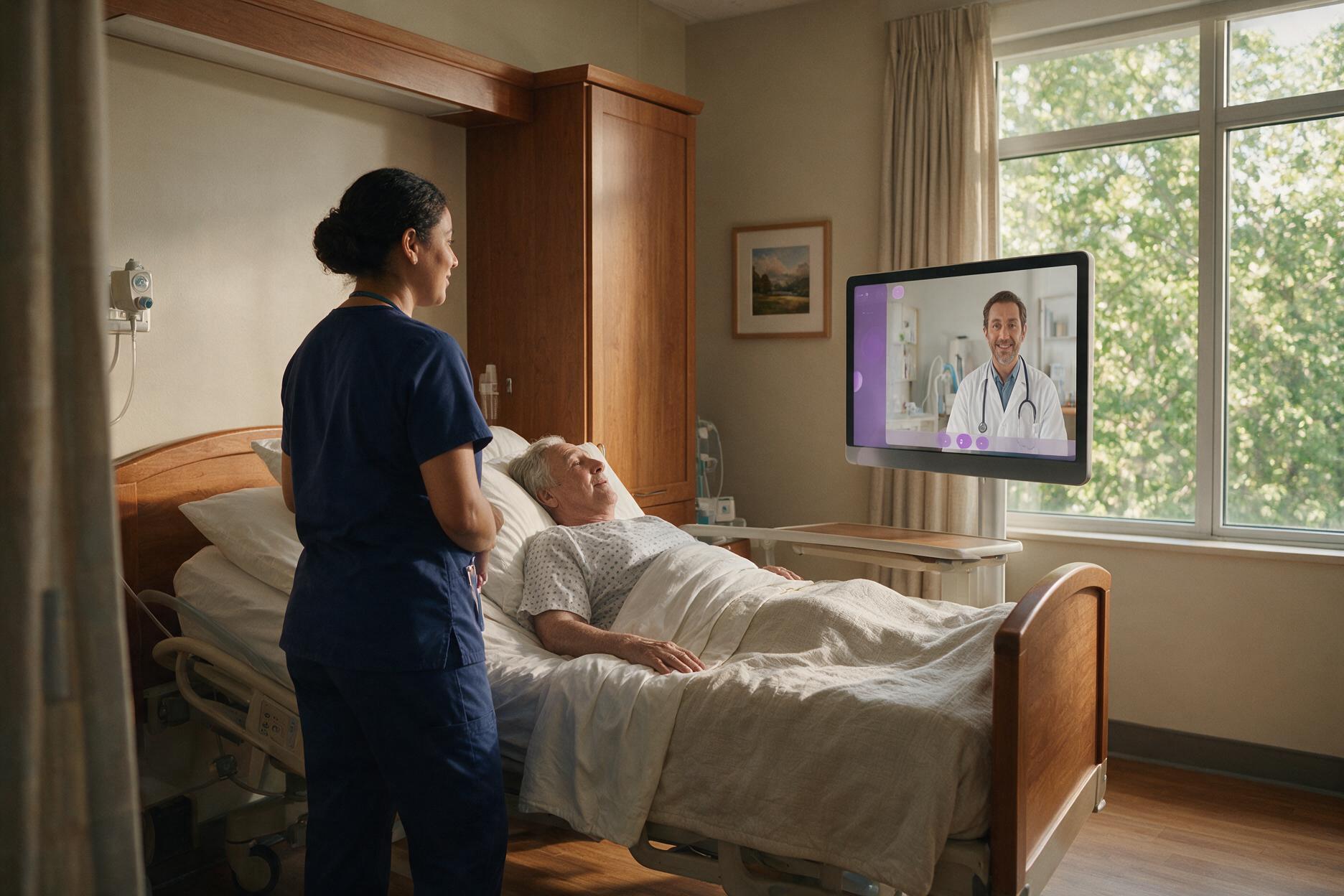
Telemedicine reduces friction at every scale. The distance between a patient and the right clinician can be eighty miles, or it can be eight hospital floors. It may be the specialist who is in the building but functionally unreachable, or the covering physician stretched across three units who cannot be in the room when a subtle change begins. Telemedicine collapses that friction whether it's measured in miles or in floors.
A camera and a connection can give a clinician access to a room they might never have reached in time on foot. But access alone is not presence. Presence requires someone to notice, understand, and act.
 Alan Pitt, MDCo-Founder, Vitalchat
That's the most important point. The systems that actually change outcomes, and not just budgets, use telemedicine to decouple presence from physical proximity. That may mean ambient monitoring that continuously looks for meaningful change, virtual coverage that identifies a subtle decline before the crisis call, or a clinician who can enter the room without walking down the hall or driving across the county.
None of these tools creates presence on its own
They create presence when someone owns the signal, understands the clinical context, and has a clear path to respond. They remove the friction without removing the attention. That is the real challenge. Too many remote care models reduce one form of friction while quietly accepting a loss of clinical attention somewhere else.
Designing Care So Presence Survives Distance
I don't frame the goal as closing the distance. Distance, in a country this large and a workforce this stretched, is not going away. Patients will continue moving between rooms, facilities, and homes while clinicians continue covering more ground with fewer resources.
That is the standard virtual care should be held to. A camera is not presence, and a connection is not care. Presence exists when someone owns the signal, understands the context, and can act before a subtle change becomes a crisis.
The standard to hold a virtual care model to
- Someone owns the signal, a named role rather than a shared assumption.
- That person understands the clinical context, not just the alert.
- There is a clear path to act before a subtle change becomes a crisis.
The goal is to design care so clinical presence survives the distance
When virtual care removes friction without removing attention, being far away no longer has to mean being absent.
FAQ
What does “presence” mean in this framing?
A clinician noticing, checking in, and intervening before a problem becomes a crisis. It is what we actually mean when we say “care,” and it is distinct from access: a room a clinician can reach is not the same as a patient someone is attending to.
How is friction different from cost?
Cost sits in the cost column. Friction does not. It is the gap between a patient and active clinical attention, and it drags presence down with it, which is why the savings from moving care farther out and the harm that follows come from the same source.
Isn't telemedicine mainly a rural access solution?
That is the most obvious version, not the whole one. The distance between a patient and the right clinician can be eighty miles or eight hospital floors: the specialist in the building but functionally unreachable, or the covering physician stretched across three units. Telemedicine collapses friction at either scale.
Does adding cameras and monitoring create presence?
No. Ambient monitoring, virtual coverage and remote visits remove friction; they do not supply attention. Presence appears only when someone owns the signal, understands the clinical context, and has a clear path to respond.
Why do remote care models fail even when nothing goes wrong?
Because they reduce one form of friction while quietly accepting a loss of clinical attention somewhere else. No error is made, the chart stays clean, and the decline is caught late, when it is no longer subtle.
If distance isn't going away, what is the actual goal?
To design care so clinical presence survives the distance. When virtual care removes friction without removing attention, being far away no longer has to mean being absent.